For about a decade, the webinar funnel was the default answer to "how do I sell coaching or a course online." Many creators and coaches built their businesses on it. It worked, reliably, for a long time.
It has been working less well for several years now. This isn't a controversial observation — creators who used to see one funnel profile now see another. The question is what changed and what works better in its place.
The era of the webinar funnel
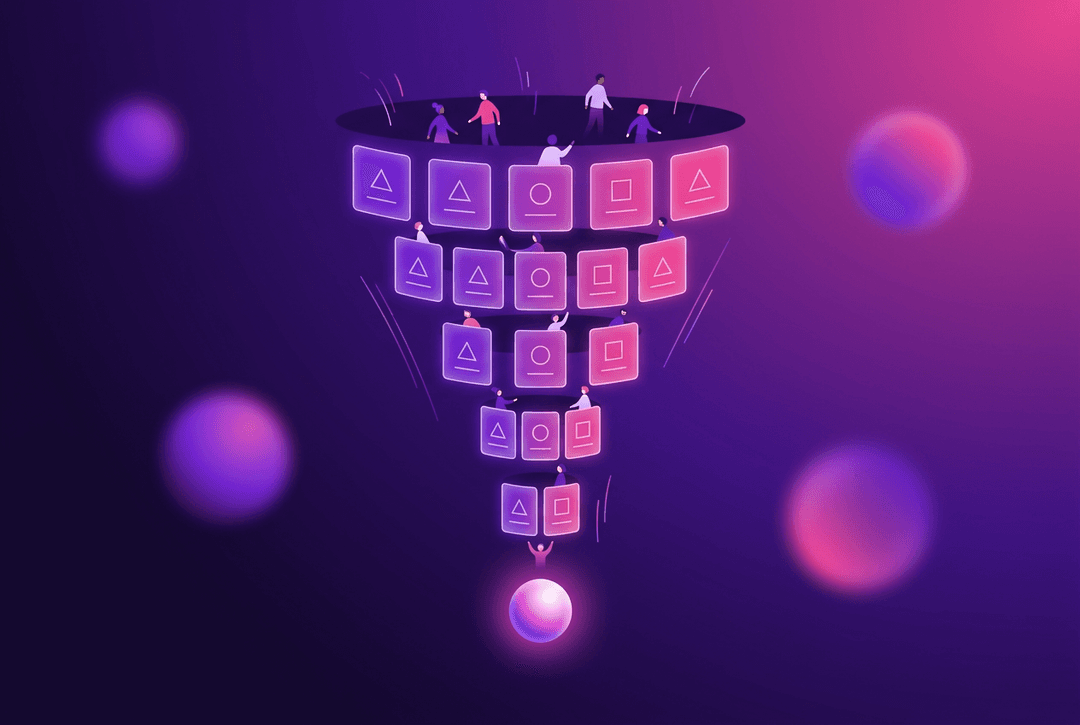
In the late 2010s, the webinar funnel had a characteristic shape. Cold traffic from Facebook ads hit a signup page. Ten to twenty percent of visitors registered. A meaningful fraction of registrants showed up live. The pitch landed on an audience that had already invested an hour. A healthy percentage bought.
The funnel worked for three structural reasons:
- Webinars were novel enough to hold attention. Attendees hadn't seen the structure hundreds of times already.
- Live pressure drove conversions. Live-only deals (with no replay) created real urgency. Attendees who wanted the offer had to decide during the session.
- Facebook ads were cheap. Cold-traffic CAC was low enough that even middling conversion rates produced positive ROAS.
All three of those conditions have weakened. Not individually catastrophically, but in compounding combination.
What changed
Attention is more fragmented
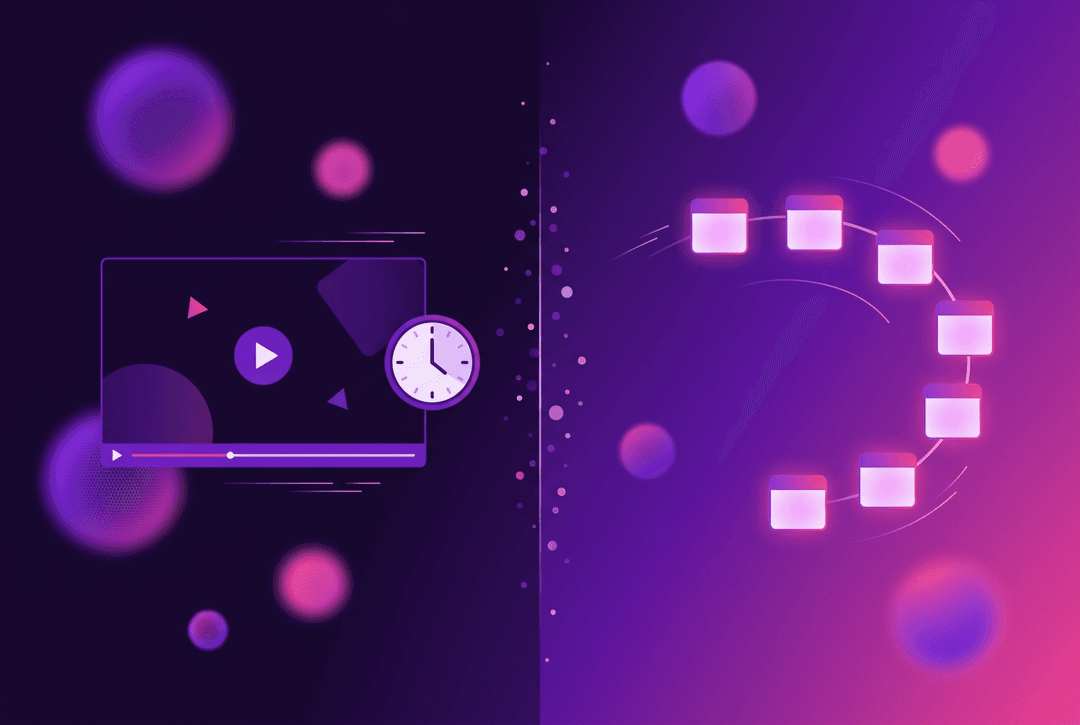
Sitting through 60–90 minutes of a single broadcast, live, with no pause button and no fast-forward, is a bigger ask in 2026 than it was in 2016. The average attention span for long-form consumption has drifted in the wrong direction as TikTok, Reels, and Shorts have trained the attention economy on 15–60 second units.
A webinar isn't just a marketing asset competing against other marketing assets — it's an hour-long content commitment competing against infinite short-form video on the same device.
Audiences are webinar-trained
The "value → story → pitch" structure has been used so many times that audiences can predict the pitch moment with uncanny accuracy. The minute the presenter says "so here's what I've done for my clients," attendees know an offer is coming. Sales resistance activates.
The more sophisticated a buyer is, the faster they recognize the structure. For some niches (marketing-to-marketers, sales-to-salespeople, coaches-to-coaches), the format is now essentially transparent — which is a polite way of saying broken.
Replay culture killed urgency
Almost every webinar now has a replay. That means the "live-only offer" that drove urgency a decade ago doesn't exist anymore. Attendees know they can catch it later. "Later" usually means never.
Even for webinars that genuinely are live-only, audiences have been trained to assume a replay exists. The behavioral pattern is burnt in.
Ad costs went up, targeting went down
The cold-traffic-to-webinar economics that made the funnel work depended on cheap, well-targeted Facebook ads. iOS ATT changes, Facebook targeting deprecations, and general cost inflation have made cold-traffic acquisition notably more expensive. A funnel that converted at 3% on $5 CPM produced ROAS. The same funnel at 2% on $15 CPM does not.
Better-converting alternatives emerged
Arguably the biggest shift: webinars used to be the best asset for converting cold traffic to customers in a creator-economy context. They're no longer the best. Multi-day challenges, free interactive tools, diagnostic assessments, and cohort-based programs all produce stronger end-to-end conversion profiles for the right audiences.
Webinar conversion rates didn't just drop because webinars got worse. They dropped partly because the baseline they compete against got better.
What's replacing the webinar funnel
Four patterns are taking share from webinars, often overlapping:
Multi-day challenges
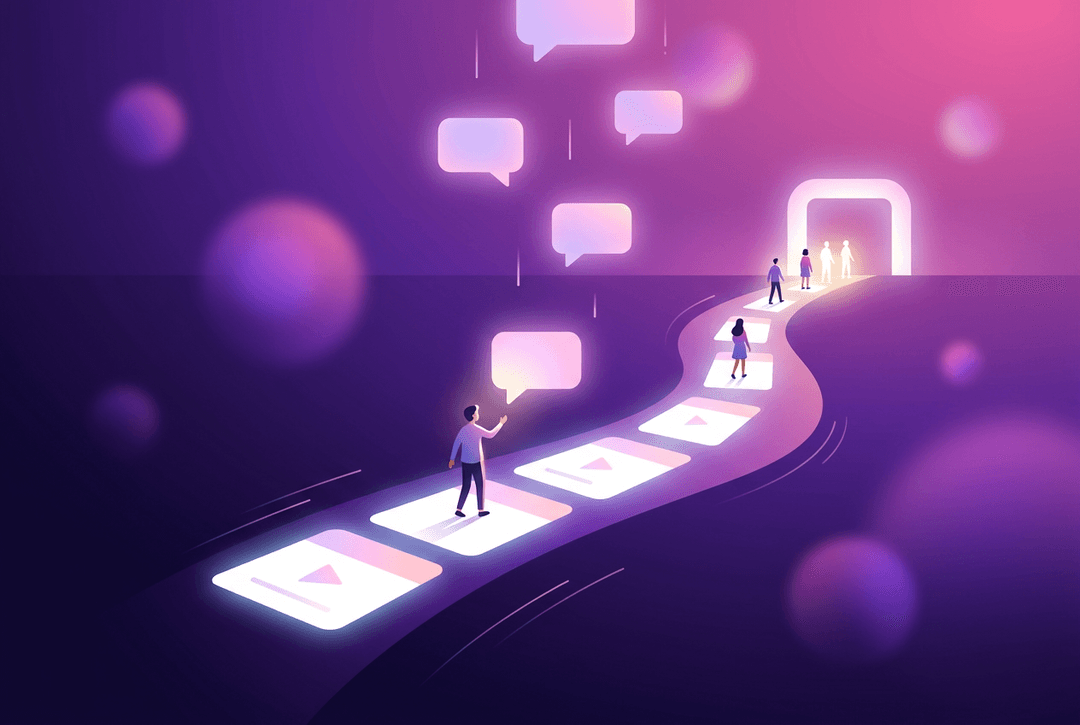
Instead of cramming everything into a single session, a challenge spreads engagement across 5–30 days of small daily tasks. Participants experience the creator's methodology across multiple touchpoints, build a real relationship, and arrive at the final-day offer having already put in meaningful work.
This is the closest direct replacement for a webinar funnel in the creator and coaching economy. Where a webinar had one shot to convert, a challenge has seven to thirty.
Free interactive tools and diagnostics
A free tool that solves a specific problem in under two minutes produces a strong opt-in with immediate value delivered. Diagnostic assessments with personalized reports feel custom and drive higher consumption than generic lead magnets.
These formats fit well at the top of the funnel as cold-traffic entry points — the challenge or cohort handles the middle.
Short cohort-based programs
3–7 day paid micro-cohorts with a specific outcome ($97–$297). These fill the gap between a free lead magnet and a full coaching program. Buyers get a low-risk taste of working with the creator; the creator gets a qualified, paid lead who is now far more likely to upgrade.
Hybrid: challenge + live event
The highest-converting pattern we see combines a short challenge with a live event. Days 1–5 or 1–6 are challenge content; day 6 or 7 is a live Q&A, workshop, or pitch event. This combines the trust-building of a challenge with the conversion urgency of live.
Importantly, the live event in this hybrid is not doing the cold-traffic work. The challenge has already warmed the audience. The live event is converting a hot list, which is the context where webinars still work well.
What to do if your webinar funnel is underperforming
Three options, roughly in order of effort:
- Convert the webinar into a 5–7 day challenge. Take the content you currently cram into a 60-minute presentation and break it into 5 daily tasks. Add a signup page. Add daily emails. Add a final-day offer. The existing webinar script is your content outline.
- Wrap the webinar inside a challenge. Keep the webinar, but require participants to complete a 5-day challenge to attend. The challenge warms the audience; the webinar converts them.
- Replace the webinar with a diagnostic. If your content is fundamentally about assessment (what's broken, what to do next), a diagnostic with a personalized report may convert better than a webinar for the same audience.
You don't have to abandon webinars. You do have to stop treating them as the default lead-gen asset for every audience and every offer.
Thinking of replacing your webinar with a challenge? Chalzy's AI builds a full multi-day challenge — signup page, daily content, emails, and offer page — from a single description of your existing webinar. Start a free 14-day trial and test the new format against your current one.