Most businesses still run their marketing like it's 2015. The webinar funnel, the long-form ebook funnel, the generic "free consult" funnel — they all still exist, and they all still work at rapidly declining conversion rates.
The challenge marketing funnel is the exception. It's one of the few funnel patterns where end-to-end conversion rates have gone up over the past three years, not down. This playbook shows you how to build one.
What is a challenge marketing funnel?
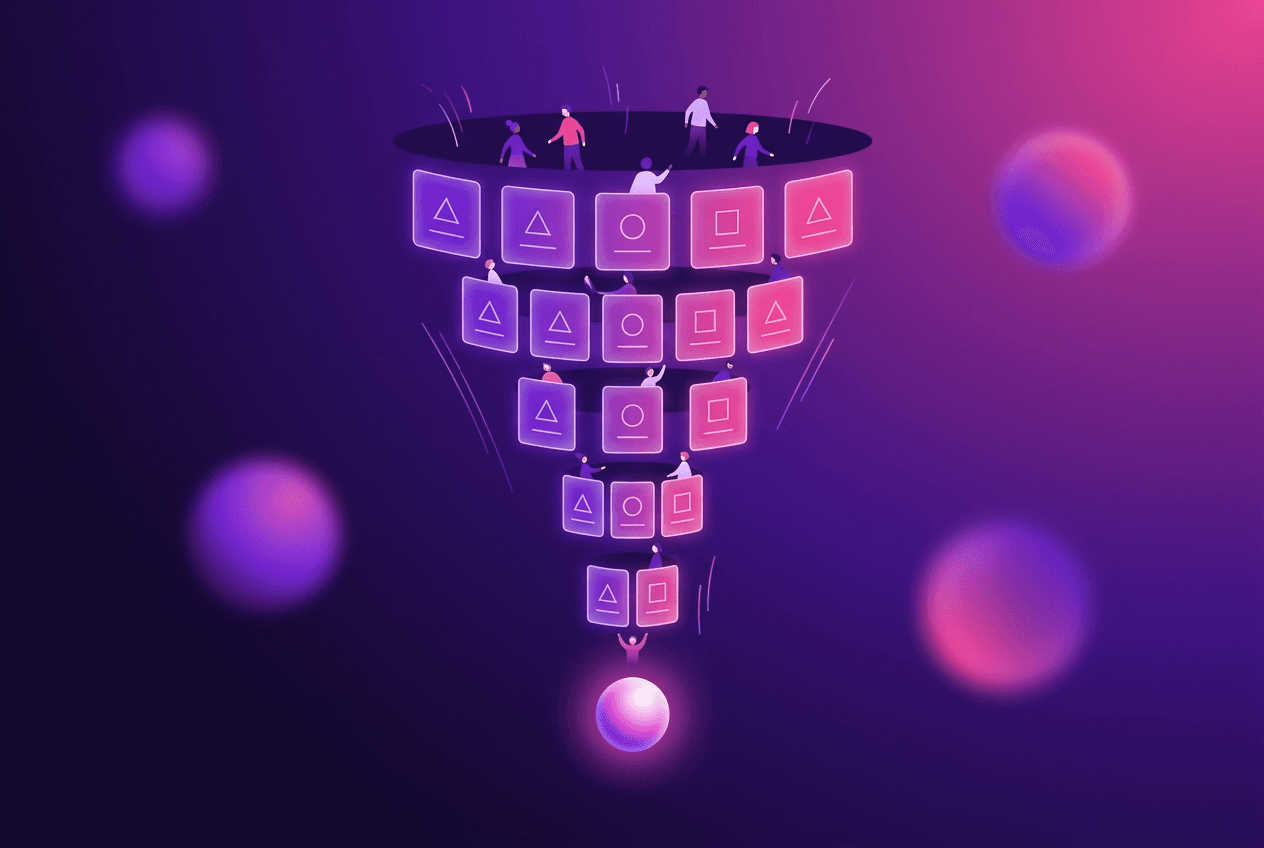
A challenge marketing funnel is a marketing funnel where the central conversion asset is a time-bound, multi-day challenge. Participants sign up (top of funnel), complete a daily task over 5–30 days (middle of funnel), and receive a paid offer at the end (bottom of funnel).
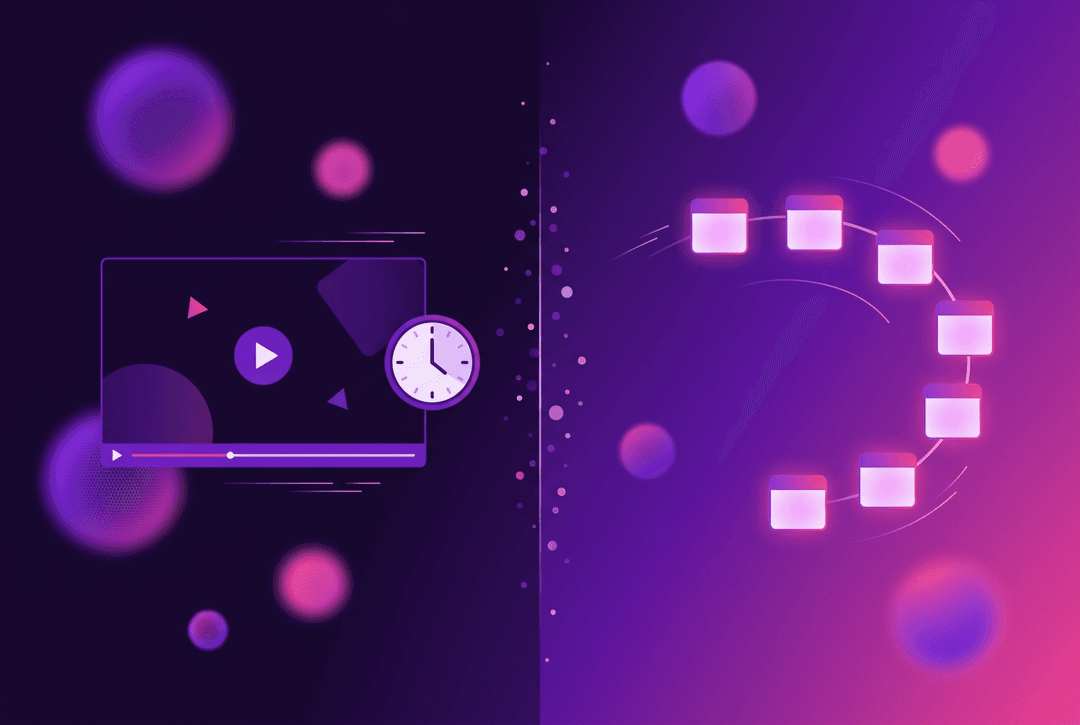
The unusual thing about a challenge funnel is that it collapses three traditional funnel stages into one experience. In a classic funnel, top-of-funnel is a blog post, middle-of-funnel is a webinar, and bottom-of-funnel is a demo — three assets, three handoffs, three chances for the lead to drop. In a challenge funnel, one asset does all three jobs.
Why challenge funnels outperform webinar funnels
Four structural advantages:
- Multiple touchpoints, not one. A 7-day challenge creates at least seven meaningful interactions with your brand. A webinar creates one, maybe followed by a replay email. Familiarity compounds.
- Active participation, not passive watching. Participants who do something feel ownership of the result. Attendees who watch something feel entertained and forget within a week.
- Cohort energy. Leaderboards, team competition, peer comments — challenges generate social dynamics webinars don't. Participants stay engaged because other participants are engaged.
- The challenge previews the paid product. If you sell coaching, the challenge is a 7-day taste of coaching. If you sell a course, the challenge is three lessons from the course. The pitch at the end isn't a pitch — it's "continue the work we started."
The structural result: on end-to-end signup-to-sale conversion, challenge funnels consistently outperform ebook and webinar funnels. Paid cohort challenges can even be revenue-generating at the top of the funnel — a rare property for a marketing asset.
The anatomy of a challenge marketing funnel
A complete challenge funnel has five components:
1. The offer ladder
Before you build the funnel, you need to know what you're selling. A challenge funnel isn't a free-form marketing exercise — it's a specific path from free (the challenge) to paid (your core product).
Write down three things:
- Your core paid offer. The thing you ultimately want them to buy. A $500 course, a $2,000 coaching package, a $50/month SaaS subscription, a $5,000 consulting engagement.
- A plausible next step after the challenge. An offer the challenge has earned the right to make. If the challenge is a 7-day content marketing crash course, the next step is a 30-day content coaching cohort, not a $30,000 agency retainer.
- The outcome of the challenge itself. The specific, measurable thing a participant will have at the end. "Write the first chapter of your book" is a challenge outcome. "Learn about writing" is not.
2. The landing page
The challenge landing page has one job: convert visitors into signups. It should be short, specific, and outcome-focused.
The five elements that matter most:
- Headline that promises a specific outcome with a specific timeframe. "Write Your First Chapter in 7 Days" beats "Become a Better Writer."
- A visible signup counter. Social proof works. "1,847 writers have joined" is a near-free conversion rate bump.
- A brief day-by-day outline. Show people what they'll be doing. Specificity builds trust.
- One single-field signup form above the fold. Email. That's it. Every additional field adds friction, and friction costs signups.
- Your face and credentials. A founder's photo and one-sentence bio consistently outperforms an anonymous brand page because people sign up to learn from a person, not a logo.
What to leave out: long-form sales copy, multiple CTAs, pricing (it's free), testimonials from the paid product (save those for the end).
3. The daily content
The challenge itself is the funnel. Every day is a middle-of-funnel nurture touchpoint, delivered as a combination of email and an in-challenge daily view.
Each day should deliver:
- A specific task that takes 10–20 minutes to complete.
- Short context explaining why the task matters — not a mini-lecture, just 200–400 words.
- A way to share progress (a comment, a submission, a social share).
- A visible signal of progress — a streak, a leaderboard position, a day count.
Common mistake: treating each day like a mini-course lesson and dumping 1,500 words of content per day. Participants burn out. Keep daily content skimmable.
4. The pitch
The offer at the end of the challenge is the entire reason the funnel exists. Most challenges underpitch — they rely on a soft "if you want to keep going, here's a thing" at the end.
Instead, build the pitch into the final two days of the challenge:
- Day N-1: Introduce the offer as "what comes next" in the participant's transformation. Not a hard pitch — a framing of where they are and where they could go.
- Day N: Direct CTA with time-bound incentive. "The cohort doors close Friday" or "Early-bird pricing ends in 48 hours." Urgency matters — challenges create energy, and that energy dissipates fast after day N.
Post-challenge, a 5–7 day email sequence reinforces the pitch for non-converters, with objection handling, testimonials, and a final deadline.
5. The post-challenge landing page
When a participant completes the last day, they should land on a dedicated "what's next" page — not drop off into nothing. This page has the offer, social proof, and a clear CTA.
Chalzy's post-challenge landing pages handle this automatically: a branded page with custom content and upsell offer cards shows up as soon as the participant completes the last day, and styled upsell cards are included in the completion email.
Timing and cadence
The single biggest decision in a challenge funnel is how long the challenge runs.
| Duration | Best for |
|---|---|
| 3–5 days | Top-of-funnel lead capture, fast wins |
| 7–14 days | Middle-of-funnel nurture, most lead-gen challenges |
| 21–30 days | Mid-ticket offers, transformation products |
| 60+ days | Premium paid challenges only |
Completion rates fall as duration grows — that's the trade-off to plan around. A longer challenge means more time to build trust and demonstrate methodology, but fewer participants make it to the pitch. Choose duration to match how much runway your offer needs to feel earned.
For a cold-audience lead-generation funnel, 7 days is the sweet spot. Long enough to build trust, short enough to hold attention.
For a paid challenge that leads to a higher-ticket offer, 14–21 days lets you demonstrate enough of the methodology to justify the upsell.
Avoid running a 30-day free challenge for cold traffic — drop-off is brutal and the pitch lands on too small a completing audience.
How to promote a challenge funnel
Promotion happens in five phases:
- Pre-launch (2–4 weeks before). Build a waitlist. Email your existing list. Post about the upcoming challenge on social. Waitlist signups consistently convert to day-one participants at a much higher rate than cold traffic, because they have already said "I want in."
- Launch week. Email burst, social campaign, and paid ads driving to the landing page. This is where most of your signups come from. Budget the paid spend to hit your signup target; don't dribble it out over months.
- During the challenge. Encourage participants to share their progress publicly — tagged social posts, referral links, peer invites. A well-designed challenge generates a meaningful share of its total signups during the challenge itself, through organic participant sharing.
- Affiliate and partner. If you have warm partners or past customers, give them a tracking link. Revenue share on any resulting paid-product sale.
- Post-challenge. Publish participant wins as social proof for the next cohort. A challenge funnel is usually run several times per year on the same template, with each cohort better than the last because of accumulated testimonials.
Tools and infrastructure
A challenge marketing funnel needs:
- A signup landing page with email capture
- A way to deliver daily content (email + a persistent daily view)
- Scheduling and unlock logic (day 2 doesn't unlock until day 2)
- Tracking (who signed up, who engaged, who completed, who bought)
- Optional but high-leverage: leaderboards, teams, live video, upsell handling
You can stitch this together with a mix of landing-page builders, email tools, and custom logic — which is how most teams ran challenges before 2023. It works, but every handoff between tools is a place the funnel leaks.
Or you can run the whole funnel from inside a purpose-built challenge platform. Chalzy is built specifically for challenge marketing funnels — the signup page, daily content, email cadence, gamification, live video, post-challenge upsells, and analytics are all in one product. Our AI generates the daily content, hero images, and marketing copy from a single description of the challenge, so you can ship a full funnel in a day or two instead of a month.
Either way, pick one tool or pick a stitched stack — just commit before you start writing copy, because changing tools mid-funnel is painful.
A simple first funnel to build this week
If you've never run a challenge funnel before, build this one:
- Duration: 7 days
- Audience: Your existing email list + LinkedIn/X followers
- Topic: The first milestone of your paid product — not the whole product, just the first step
- Daily structure: 15-minute task, short context, comment section
- Pitch: On day 6, introduce your paid offer as "the natural continuation." On day 7, make the offer with a 72-hour deadline.
- Post-challenge: 5-email follow-up for non-converters.
Measure four numbers: signups, day-one engagement, completion rate, and sale conversion. Iterate from there.
The hardest part of building a challenge funnel isn't the infrastructure — it's deciding what 7 days of content would actually make a stranger trust you enough to buy. Once you answer that, the rest is execution.
Want to see a challenge funnel in action? The Chalzy AI Challenge Wizard generates a full 7-day challenge — content, images, signup page, and emails — from a single description. Start a free 14-day trial and ship your first challenge funnel this week.