The webinar funnel has been the dominant lead-generation pattern for a decade. For many businesses it still works — for many others, conversion rates have quietly eroded as audiences have grown over-exposed to the format.
Meanwhile, multi-day challenges are gaining ground as a lead-generation pattern, especially for coaches, creators, course builders, and SMB SaaS. This post breaks down the comparison and explains when to use each.
The TL;DR comparison
| Dimension | Webinar | Multi-day challenge |
|---|---|---|
| Attention model | 60–90 min single session | 10–20 min × N days |
| Engagement style | Passive watching | Active participation |
| Pitch moment | Last 15 min of session | Final day + follow-up emails |
| Trust building | Minutes | Days |
| Cost to produce | Low–medium (one session) | Medium (multi-day content) |
| Reusability | High (evergreen replay) | High (rerun cohorts) |
| Best for | One pivotal concept, warm audience | Cold-to-warm lead gen, skill/habit products |
The two formats aren't substitutes — they excel in different contexts. The question is which one fits your audience and offer.
Why webinar conversion has eroded
Three things changed since the webinar-funnel heyday:
- Attention is more fragmented. The 60-minute webinar competes with Zoom meetings, Slack notifications, and infinite short-form video. Show-up rates have drifted down over time, which compounds at every stage of the funnel.
- Audiences are webinar-trained. A large segment of your target audience has seen the exact "value → story → pitch" webinar structure many times over. The format itself now triggers sales resistance.
- Replay culture killed urgency. Because nearly every webinar has a replay, the "live" pressure that drove conversions is gone. Attendees think, "I'll watch it later," and many never do.
Webinars still work — especially for warm audiences with a single pivotal concept to deliver. But cold-traffic webinar funnels are harder to make work than they were a decade ago.
Why challenges convert
A multi-day challenge solves every problem that reduced webinar conversion:
1. Attention is spread across days, not crammed into one session. A participant only needs to find 10–20 minutes per day. That fits into a commute, a lunch break, or a slow Sunday morning. Total time invested across a week can easily exceed the length of a single webinar — delivered in digestible slices that are easier to commit to.
2. Active participation builds ownership. Webinar attendees consume. Challenge participants do. The minute someone completes day one of a fitness challenge and feels better, or writes their first page of day one in a writing challenge and sees it on the page — they own that result. They associate your brand with their progress. That's a far stickier relationship than "remembered a webinar speaker."
3. Cohort dynamics compound engagement. Leaderboards, teams, streaks, and comment sections turn a solo experience into a group experience. Participants come back for day 4 because they see that someone on their team just completed day 4. The challenge generates its own momentum.
4. The challenge is the product demo. This is the structural advantage that's hard to beat. A coaching challenge is literally coaching. A writing challenge is writing instruction. A fitness challenge is fitness training. By the time the pitch lands, the participant has experienced your methodology for 7+ consecutive days. Objections like "does this actually work?" evaporate — they felt it working.
5. The final-day urgency is earned. On the last day of a challenge, participants have invested a week of effort toward an outcome. A time-limited offer to "keep going" at the end of that week lands on an audience that has already put in the work — which is a different emotional state than someone who passively watched a 45-minute pitch.
What the engagement trail looks like
Think of the two funnels as shapes of engagement over time.
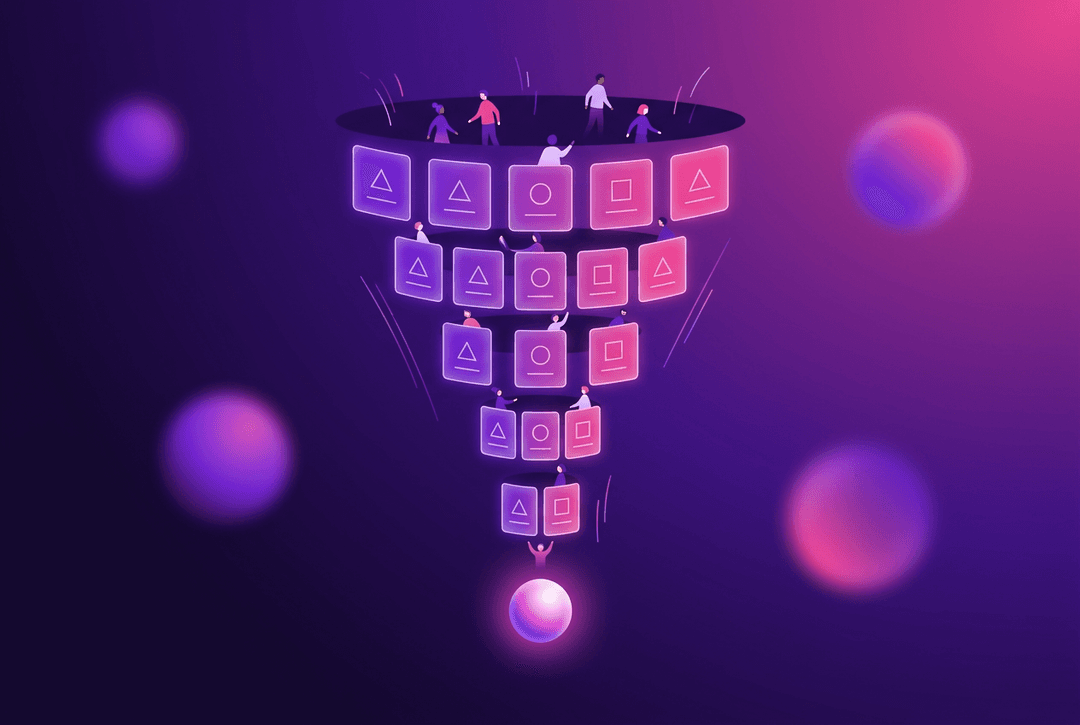
A webinar funnel concentrates all the engagement into a single session. A registrant gets a reminder email, (maybe) shows up, watches for 45 minutes, sees the offer, and makes a decision on the spot or not at all. If they don't show live, the replay fights for attention against everything else in their inbox.
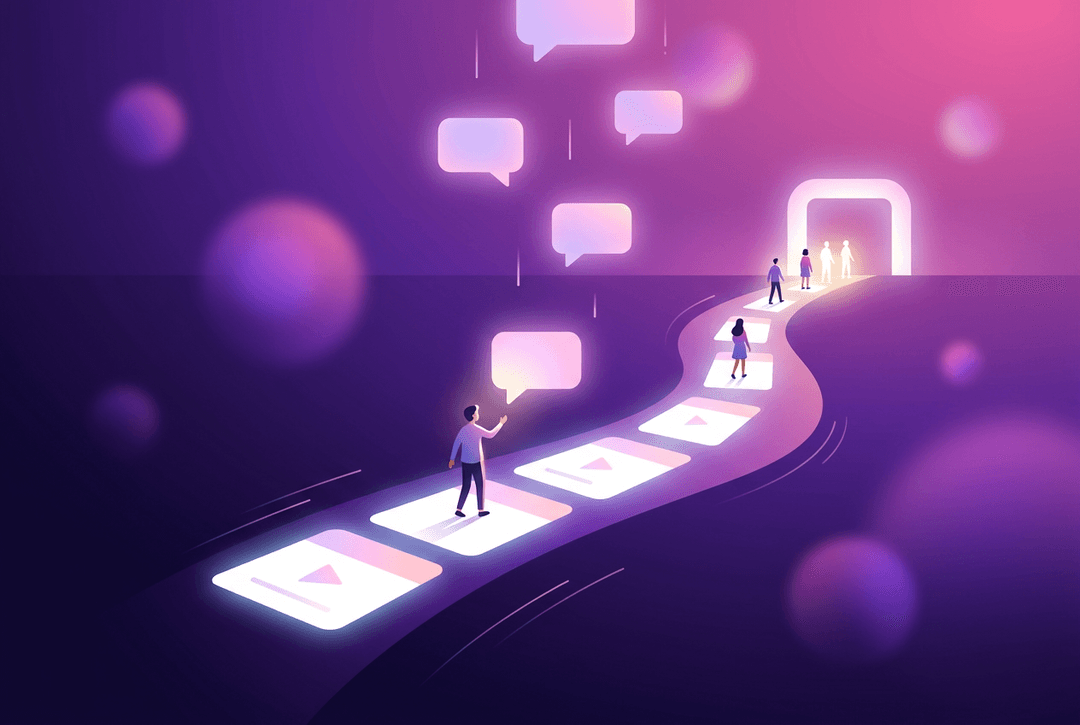
A challenge funnel spreads engagement across many days. A participant gets daily reminders, completes small tasks, sees progress on a leaderboard or streak, interacts with other participants, and arrives at the final-day offer already invested. The funnel builds momentum instead of expending it in one shot.
The compounding effects of a challenge funnel extend past the initial pitch:
- Completers who don't buy at the end are far more receptive to follow-up offers in the weeks afterward — because the relationship continues past the challenge.
- Completers generate testimonials, case studies, and social proof you can use to improve the next cohort.
- Completers are more likely to refer the challenge to peers, because they have a concrete outcome to show off.
When to use a webinar anyway
Webinars still beat challenges in three specific contexts:
1. Warm audiences with a single concept. If you have an existing email list and one pivotal idea that needs 45 minutes of explanation — say, a strategic framework or a technical demonstration — a webinar is still the right tool. The friction of a multi-day challenge isn't warranted.
2. Enterprise B2B and high-ticket. For deals over $25K, a webinar followed by a 1:1 demo is usually the right funnel. Decision-makers don't have time for a 7-day challenge. The challenge pattern works better below enterprise — SMB B2B, creator economy, coaching, consulting.
3. Product launches to existing customers. If you're announcing a new feature or product to an already-warm list, a 45-minute launch webinar with live Q&A converts better than a multi-day challenge. Use challenges for new customer acquisition, webinars for existing customer expansion.
When to use a challenge
Challenges outperform webinars when:
- Your audience is cold or lukewarm — most of them don't already know you personally.
- Your product involves skill, habit, or behavior change — coaching, courses, fitness, productivity, writing, business-building.
- You sell to individuals or small teams (SMB, creator economy, prosumer).
- You want to build a brand, not just run a campaign — challenges generate testimonials, social proof, and community that webinars don't.
- You want a reusable asset — well-designed challenges can rerun indefinitely with minor refreshes.
If two or three of those apply, a challenge funnel will almost certainly outperform a webinar funnel.
The hybrid: challenge + live event
The highest-converting pattern we see is a hybrid:
- Days 1–6: Daily challenge content, short tasks, cohort engagement.
- Day 7 (or immediately after): A live event — a Q&A session, a group coaching call, a results showcase. Use Chalzy's built-in live video or drop a Zoom link in.
- Day 7 pitch: The paid offer is presented live, with real-time questions and scarcity.
This pattern combines the trust-building of a challenge with the conversion urgency of a live event — and in our experience with creators and coaches, it consistently outperforms either format on its own.
How to choose
Ask yourself three questions:
- How warm is your audience? Cold or lukewarm → challenge. Warm → webinar.
- What are you selling? Skill, habit, or transformation → challenge. One-shot concept or single purchase → webinar.
- What's your price point? Under $5K → challenge. $25K+ → webinar into demo.
For most businesses in the creator economy, coaching, consulting, course creation, fitness, wellness, and SMB SaaS — the answer is almost always a challenge.
Want to test a challenge funnel against your current webinar? Chalzy builds a full 7-day challenge funnel from a single description — AI-generated content, images, signup page, and emails — in minutes. Start a free 14-day trial and run your first challenge funnel this month.